
Is My Backyard Tree Sick, Stressed or Just Being Dramatic?
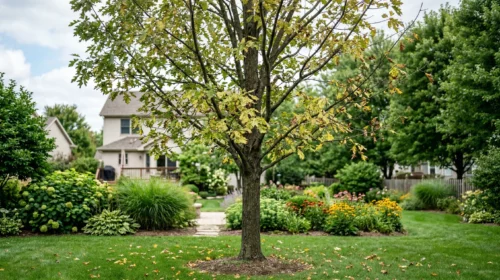
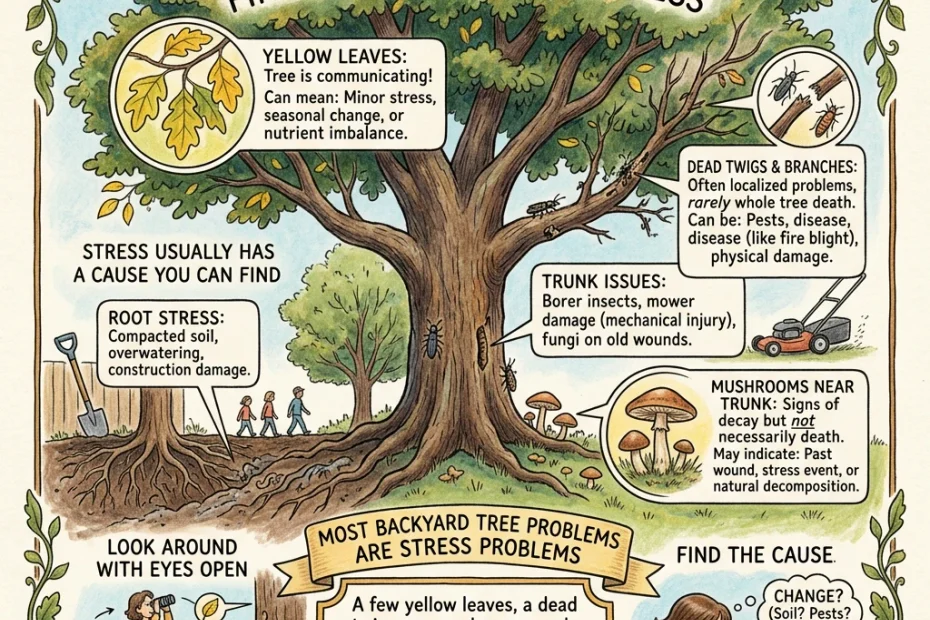
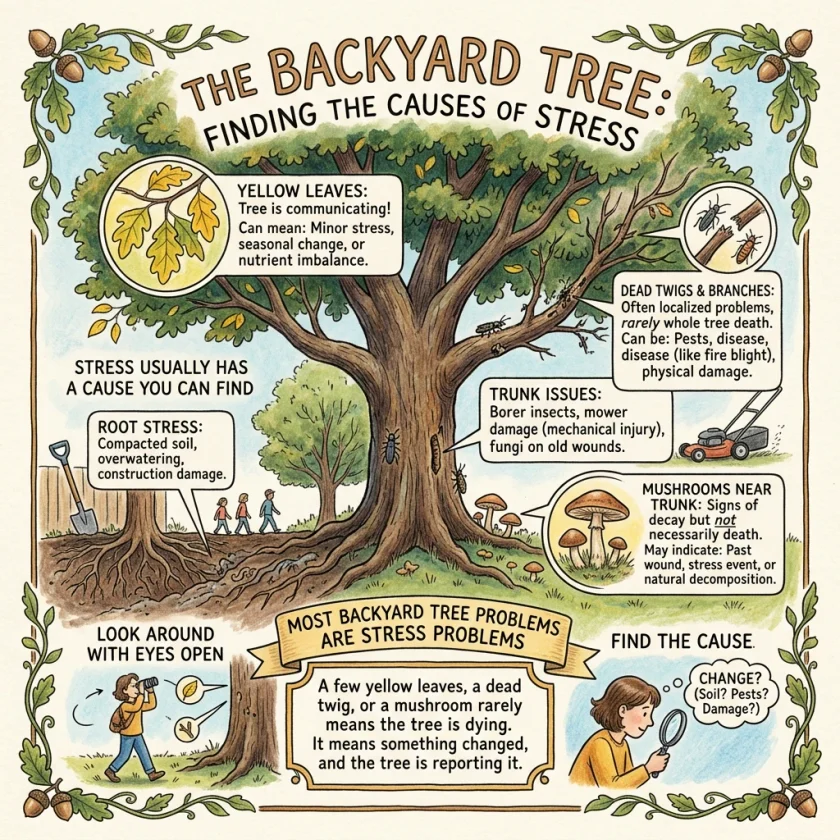
Most backyard tree problems are stress problems, and stress usually has a cause you can find by walking around the tree with your eyes open. A few yellow leaves, a dead twig or a mushroom near the trunk rarely means the tree is dying. It means something changed, and the tree is reporting it.
The common assumption is that every symptom is a disease and every disease needs a spray. Often the tree is reacting to a dry month, buried roots or a compacted lawn, and the spray treats none of those. This guide starts with what you can see, works backwards to the likely cause, and says plainly which popular fixes to skip.
Is it the tree, or just a rough season?
Before you read any single symptom, ask what changed. Trees rarely get sick out of nowhere, and the cause often happened months before the symptom showed up. A drought in summer can produce dieback the following spring.
Common stressors in a home yard include:
- A long dry spell, or the opposite: soil that stays soggy after poor drainage or overwatering
- Digging or trenching near the roots for a fence, pipe, patio or garden bed
- Soil piled over the roots, or vehicles parked and driven over them
- Road salt or de-icer washing into the soil
- A late frost after buds have opened
- A new change in light, such as a neighbor removing a tree that used to shade yours
Then work through three questions, in order:
- Where is the symptom? The whole tree, one side, one branch, or only the lowest leaves? A symptom confined to one branch points to a problem in that branch. A symptom across the whole crown points to roots, water or soil.
- When did it start? Overnight, over a season, or over years? Fast change after a weather event is usually stress. Slow thinning over years is usually a root or site problem.
- What else changed nearby? Construction, new paving, a new sprinkler schedule, a new neighbor’s dog-run? Walk the whole root zone, which reaches well past the edge of the canopy.
Take dated photos of the same view once a month. A tree that looks the same in March and June is telling you something different from one that looks worse every time.
What are the leaves trying to tell you?
Leaves are the easiest part of the tree to read, because they show the pattern of a problem. Match what you see to the list below.
- Whole leaves turning pale yellow, older ones first: often a water issue, either too little or too much, or a nutrient shortage. Push a trowel or long screwdriver into the soil 4 to 6 inches deep near the dripline. Bone dry or soaking wet tells you more than the leaf does.
- Yellow leaves with green veins, mostly on the newest growth: this is interveinal chlorosis, and it often means the soil pH is too high for the tree to take up iron or manganese. Pin oak (Quercus palustris) and red maple (Acer rubrum) are well known for it in alkaline soil. A soil test settles the question before you buy anything.
- Brown, crispy edges and tips, worst after hot, windy days: leaf scorch. Water is leaving the leaves faster than the roots can supply it. Maples such as sugar maple (Acer saccharum) show it readily, and road salt can cause similar edges.
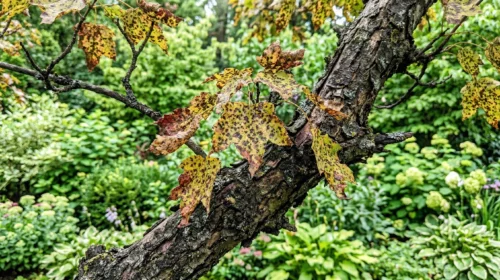
- Black, tar-like spots on maple leaves: tar spot on Norway maple (Acer platanoides) looks dramatic and is mostly cosmetic.
- Dark, scabby spots on crabapple leaves: apple scab (Venturia inaequalis) thrives in wet springs. It can cause early leaf drop, but a healthy tree usually leaves the season intact. Rake up fallen leaves in autumn to reduce next year’s spores.
- White powdery coating: powdery mildew. It looks worse than it is on established trees.
- One tree coloring or dropping leaves in midsummer while its neighbors stay green: early fall color is a stress signal. Look for root damage, drought or girdling.
- A single branch whose leaves wilt and brown while the rest looks fine: called flagging. It suggests a problem inside that branch, such as a canker, a borer or a vascular disease. In oaks, leaves browning from the tips and dropping in summer deserves a call to your local extension office or an arborist, because oak wilt spreads and needs correct diagnosis.
- Small leaves and a sparse, thin crown over several years: long-term stress, usually rooted in the site.
One caution: leaves changing color and dropping in autumn is simply the season. The signal to watch is timing and pattern, not the fact of leaf fall.
What does the bark say?
Bark protects the living layer beneath it, so changes there matter more than changes on a single leaf. They are also the symptoms most often misread.
A vertical crack on the south or southwest side of the trunk. Usually frost crack or sunscald after a cold winter, common on thin-barked trees such as young maples, linden and fruit trees. Many trees seal these over in time. Watch the crack through a few seasons. It becomes a concern if it keeps widening, or if the wood underneath looks soft or dark.
Dark, sour-smelling liquid weeping from the trunk or a fork. This is often wetwood, also called slime flux. It looks alarming and is usually not fatal. Do not drill into it or plug it.
Neat rows of small holes with sap running. Sapsucker woodpeckers. Unattractive, and rarely a threat to a mature tree.
Peeling bark. Normal on river birch (Betula nigra), sycamore (Platanus occidentalis), paperbark maple (Acer griseum) and shagbark hickory (Carya ovata). Peeling on a species that does not normally do it, with dead or dry wood underneath, is worth a closer look.
Mushrooms. The location decides what they mean:
- Clusters coming from the mulch are feeding on the mulch, and they are harmless to the tree.
- Honey-colored clusters growing from the base or roots may be honey fungus (Armillaria), which attacks roots.
- Shelf-like brackets growing on the trunk or root flare, such as Ganoderma, mean decay in the wood.
Fungi on the tree itself are a sign of decay that is already established. That is the point where a professional assessment is sensible.
Small D-shaped exit holes on an ash. In regions where emerald ash borer (Agrilus planipennis) is present, these holes, along with thinning at the top of the crown and bark splits, are the classic signs. Do not wait on this one. Ash trees in affected regions are treated or removed on a schedule that matters.
Is something eating your tree, and does it actually matter?
Finding insects on a tree does not mean the insects are the problem. The question is whether they are eating leaves or tunnelling into wood. Leaf-eaters are mostly an annoyance. Wood-tunnellers are serious.
- Aphids: clusters on new growth, with sticky honeydew on the leaves below and sometimes black sooty mold growing on it. A hard spray of water knocks them off, and ladybugs and other predators do the rest. A mature tree rarely suffers lasting harm.
- Caterpillars: tent caterpillars on cherry and crabapple, fall webworms on many hardwoods, and the spongy moth (Lymantria dispar) can strip a deciduous tree’s leaves. Most healthy broadleaf trees regrow a second set of leaves. Evergreens such as juniper and arborvitae do not recover as well, so bagworms on them are worth removing by hand early.
- Spider mites: fine stippling or bronzing on leaves, sometimes with tiny webbing, in hot, dry weather. Tap a branch over white paper. Moving specks that squash into a streak are mites. A strong spray of water reduces them.
- Borers: the one group that deserves worry. Bronze birch borer (Agrilus anxius) attacks stressed birch such as paper birch (Betula papyrifera), usually starting with dieback at the top. Sawdust-like frass, exit holes and dying branches point to borers. Healthy trees resist them far better, which is why the stress check at the start of this article comes first.
Broad-spectrum insecticide sprays also kill the predators that keep aphids and mites in check, so spraying often makes the next outbreak worse. Treat a pest only when you have identified it and the damage is more than cosmetic.
Could the trouble be underground?
When the symptoms are spread across the whole crown and no insect or fungus explains them, the roots are the first suspect. Four underground causes cover most cases.
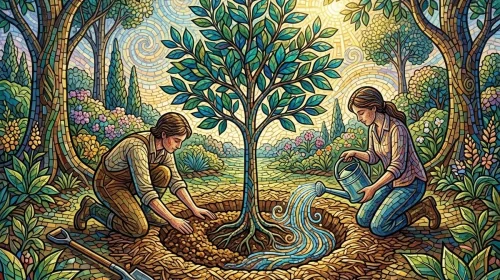
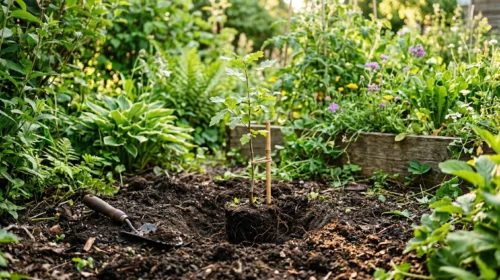
Planting too deep. The trunk should widen into a visible flare where it meets the soil. If the trunk goes straight into the ground like a fence post, the flare is buried. Roots in too-deep soil get less oxygen, and the bark at the buried trunk can rot. Gently pull soil back to expose the flare. The basics of depth, hole width and aftercare are in the guide on how to plant a tree correctly, and the same page covers the hand tools worth owning, including the trowel you will use for the moisture checks above.
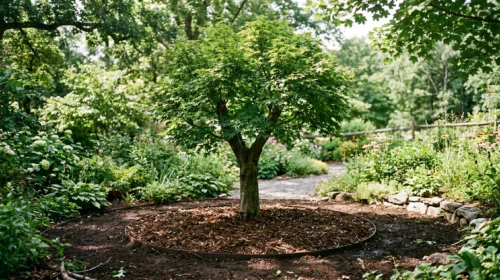
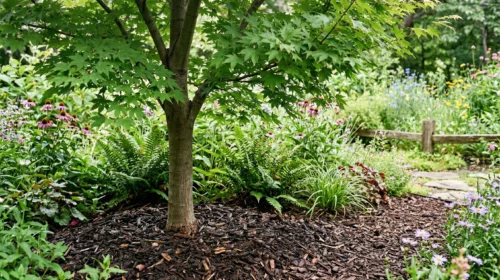
Mulch volcanoes. Mulch heaped against the trunk holds moisture on the bark, invites rot and pests, and can encourage roots to grow around the trunk instead of out. Use a flat ring about 2 to 4 inches deep, and pull it back a few inches from the trunk. A donut, not a volcano.
Compacted soil. Foot traffic, mowers and parked vehicles squeeze out the air that roots need. Signs include hard soil, standing water after rain, and bare or thin grass under the tree. Keep traffic off the root zone, mulch it, and do not till, which cuts roots.
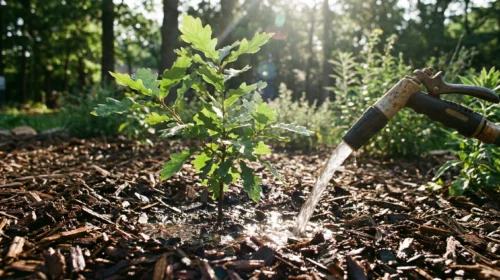
Thirsty roots. New trees need regular, deep watering through their first couple of growing seasons. Established trees in a drought benefit from a slow soak at and beyond the dripline, enough to wet the soil several inches down. A light daily sprinkle only wets the surface, so roots stay shallow.
A trunk that is flattened on one side, or a tree that leans with a roots-over-trunk look at the base, can mean a girdling root. That is a case for an arborist, because cutting the wrong root can make things worse.
What is not worth doing?
Several well-meant fixes cost money and effort and either do nothing or do harm.
- Wound paint. Trees seal wounds by walling off the damaged wood, a process called compartmentalization. Paint does not speed it up and can trap moisture against the cut. Make clean cuts at the branch collar and leave them open. In regions with oak wilt, follow local extension guidance on when to prune oaks, which is the actual protection.
- Fertilizing a stressed tree. Fertilizer, especially nitrogen, pushes soft leafy growth that damaged roots cannot support. It can also add salts to dry soil. Find and fix the cause first. Fertilize only when a soil test confirms a shortage.
- Topping. Cutting main branches back to stubs triggers a crowd of weakly attached sprouts, and the stubs decay. The tree ends up more hazardous and uglier, and it costs more to repair later. Crape myrtle (Lagerstroemia) gets this treatment so often that it has a nickname. If a tree is too big for its spot, an arborist can do reduction cuts, or the long-term answer is a smaller species.
- Flush cuts. Cutting a branch flat against the trunk removes the collar, which is where the tree seals the wound. Cut just outside the collar.
- Spraying at every spot or insect. As covered above, most leaf spots and leaf-eating insects do not justify a spray.
- Leaving stakes and ties on for years. Stakes help a young tree through its first season or so. Left on, the ties cut into the trunk.
When should you fix it yourself, and when do you call an arborist?
A simple rule sorts most cases: if failure would hit something or someone, get an assessment. If the worst outcome is that the tree looks scruffy, fix the cause and watch.
Safe to handle yourself:
- Correct mulch depth and pull it back from the trunk
- Water deeply and check soil moisture with a trowel
- Expose a buried root flare on a small tree
- Hose off aphids and mites
- Rake and dispose of leaves with spots or scab in autumn
- Remove stakes and ties that have done their job
- Prune small dead branches from the ground, cutting outside the collar
Call a certified arborist (look for ISA certification) if you see:
- A lean that is new, or soil lifting or cracking at the base on one side
- Deep or widening vertical cracks, or cracks where two trunks join
- Large dead branches over a house, driveway, play area or seating
- Conks or mushrooms growing on the trunk or root flare
- Hollows with soft or crumbly wood
- Thinning at the top of the crown that gets worse each year
- Roots cut or buried during construction
- Any branch near power lines. Contact the utility company, and never prune near them yourself.
When you hire, ask for a written assessment, ask whether they are certified, and be cautious of anyone who knocks on your door after a storm or suggests topping. Show them your dated photos. They will want to know what changed and when, and you will already have the answer.
Related Posts