

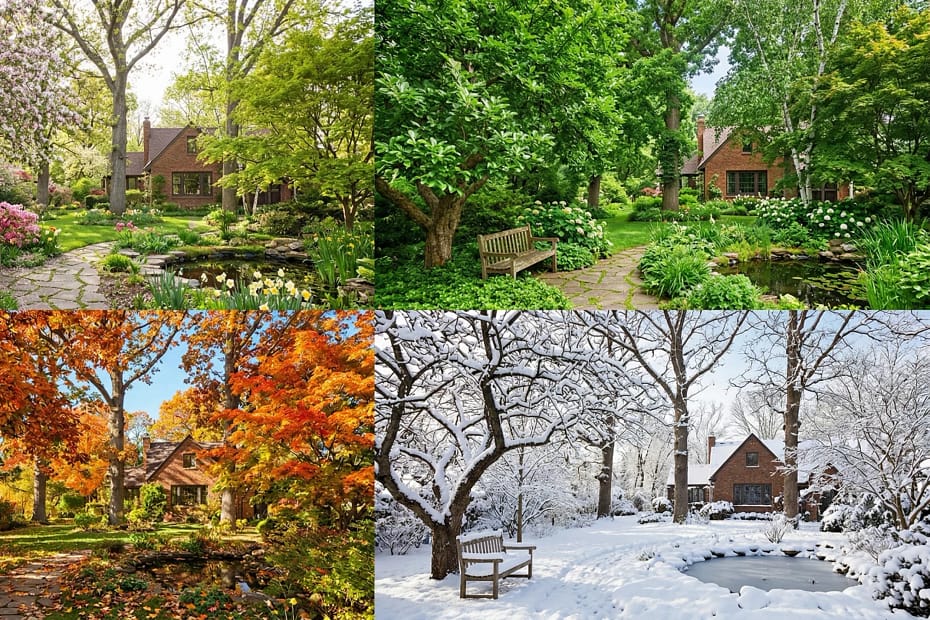
Year-round Tree Care Checklist For Homeowners
This all-in-one year-round tree care checklist breaks down the basics for any homeowner. It covers what to tackle each season, how to spot tree problems before they get bigger, and quick ways to protect your favorite yard trees from common problems. No need to be a certified arborist; just a little care goes a long way to keeping trees happy and robust.
Spring: Inspection and Early Action
Once winter chills disappear, trees wake up fast. Spring is the best time to check each tree’s overall health and look for new growth. Here’s what I suggest for a solid start:
Assess Tree Health
- Walk around each tree and check for broken branches, trunk damage, or fungus at the base.
- Look up, checking for dead spots in the canopy or branches that didn’t leaf out.
- Peeling bark, mushroom clusters, or cracks in big limbs mean it’s time for professional advice.
Clean Up and Prune
- Pick up any fallen twigs and clear mulch or debris from around tree trunks.
- Lightly prune to remove dead or damaged wood (avoid heavy trims; save those for winter).
- Prune branches growing inward or rubbing together. This improves airflow and sunlight.
Feed and Mulch
- Add compost or slow release tree fertilizer if your soil is poor or growth seems sluggish.
- Spread a fresh two to three inch layer of mulch a few inches back from the trunk. This keeps roots cool and moist but don’t pile it against the bark.
Spring is also a great time to start a tree care journal. Note the species, location, and any changes you observe. This small habit can help track patterns and spot problems early in future years.
Summer: Water and Pest Watch
Hot months can stress trees, so keeping them watered right and watching for pests is really important. Young or newly planted trees especially need a little extra attention. Deep watering during the summer not only encourages strong roots, but also helps trees survive the worst heat waves. Trees planted near sidewalks or driveways can dry out faster due to extra heat from hard surfaces, so be mindful and adjust your watering routine as needed.
Water Deeply
- Check soil moisture at the root zone. Water deeply every week or two so water reaches deep roots, not just the surface.
- Avoid frequent, shallow watering; it encourages weak, surface roots.
- Water early in the morning or after sunset to minimize evaporation and leaf scorch.
Monitor for Pests and Diseases
- Look for sticky residue, chewed leaves, or tiny webs. These can mean aphids, borers, or mites.
- Fungal leaf spots are common in damp summers. Remove fallen leaves and avoid wet foliage with overhead watering.
- If you spot something unusual, snap a photo and compare it with local extension office guides or call in an expert for stubborn issues.
Storm Protection
- Check trees after big storms for cracked or leaning trunks. These should be handled right away.
- Remove loose, hanging limbs and clear any heavy debris from the roots or base.
In late summer, watch for signs of drought stress such as wilting leaves, leaf scorch, or drop. Adjust your watering and check mulch depth to keep roots cool and hydrated.
Fall: Prep for Dormancy
As things cool down, trees start storing energy for winter. Fall is great for prepping them for the colder months ahead. If your area is prone to early frosts, begin preparations before the leaves drop entirely so roots can get maximum benefit from moisture and mulch before wintertime.
Inspect and Prune
- Take a look at trees for damaged branches or spots that could snap in snow or wind.
- Light pruning is fine, but hold off on big cuts until winter when trees are dormant (less risk of disease spread).
Leaf Cleanup
- Clear away fallen leaves from under trees. This helps prevent bugs and fungi from overwintering.
- Compost healthy leaves or use them as a mulch layer on garden beds, keeping them away from tree trunks.
Soil and Mulch Refresh
- Add mulch if the old layer has thinned. It helps insulate roots during cold spells and reduces soil freezing and thawing stress.
Water Before Frost
- Give trees a deep, slow soaking before the ground freezes, especially evergreens or new plantings.
This is also a smart season to check tree stakes or ties if your trees are young. Make sure they’re not too tight or cutting into the trunk. Adjust or remove them to let the tree trunk grow stronger and stand alone.
Winter: Protection and Planning
Winter is when trees rest and recover. Some simple steps over the cold months can protect them from snow and ice problems. While most tree activities slow down, this is a great time to plan for planting new trees or making landscape changes next spring.
Check for Damage After Storms
- Walk around after ice or heavy snow. Knock snow off small branches gently; don’t shake branches, which can snap easily.
- Remove small broken limbs promptly so wounds heal cleanly when spring comes.
Trunk Protection
- Wrap young or thinbarked tree trunks if you live where sun scald, frost cracks, or rodent damage is common.
- Remove wraps in early spring once harsh weather passes.
Pruning
- Late winter is ideal for pruning. Trees are dormant and cuts heal as soon as warm weather hits.
- Use sharp tools and make clean cuts, removing dead, crossing, or weak limbs first.
Keep an eye out for deer or animal damage in snowy winter months. Use fencing, wraps, or safe deterrents if critters nibble young bark or low branches.
General Tree Care Tips Any Time of Year
Spot and Solve Common Issues
- Yellowing leaves, stunted growth, or early leaf drop usually signal a watering or disease problem, so adjust your care routine if you see these signs.
- Stay ahead of overgrown roots. Don’t pile mulch or soil high at the base, and avoid running over roots with heavy machinery or mowers.
Know When to Call the Pros
- A professional arborist is helpful for really big trees, disease outbreaks, or when you notice mushrooms, hollow spots, or major cracks in trunks or limbs.
- Ask for references and check for an ISA (International Society of Arboriculture) certification if hiring help.
Don’t hesitate to check in with local tree experts if you aren’t sure about a concern. Sometimes a quick consult can save a treasured tree or prevent costly repairs down the road.
Common Questions & Troubleshooting
What if my tree’s leaves stay brown in spring?
Brown leaves in spring can mean winter dieback or root issues. Check for green buds or scrape a little bark to see if it’s green underneath. No green means the branch may be dead and should be pruned back to healthy wood. Consistent water and mulch help recovery if roots froze or dried out.
How much should I water my trees?
- New trees: Weekly, giving a deep soak at the root zone (about 10 to 15 gallons per inch of trunk diameter in dry spells).
- Mature trees: Every two to four weeks in dry weather; adjust for soil and species needs.
Do I really need to mulch?
Mulch is super useful for keeping soil temperature steady, holding moisture, and stopping weeds. Just keep it a few inches away from the trunk to prevent rot and keep pests away.
Is fertilizing necessary?
Many established trees don’t need extra fertilizer if the soil is healthy. Sandy soils or trees that look unhappy may benefit from a slow release fertilizer, but test your soil before adding anything extra.
If you’re unsure about fertilizing, consider adding organic matter like compost in spring and fall. It can gently give a boost to soil health without risking overfeeding.
Your Year-Round Tree Care Action Plan
- Walk your yard each season to inspect for damage, pests, or signs of stress.
- Mulch smart and water deeply, adjusting for the age of the tree and weather.
- Prune lightly in spring and fall, with heavy pruning in late winter if needed.
- Get help for big problems or trees close to the house by contacting a certified arborist.
- Celebrate your work. Healthy trees make your yard look amazing and last for generations!
What’s on your tree care checklist this season? Drop your go-to tips or questions below; you never know who you’ll help out! Give your trees a little love and they’ll return it tenfold for years to come.
Botanicus Plus an AI PLUGIN for starters and experts
Botnicus Plus boasts an array of new features, enhancing its global appeal and user interaction. These include: 1) Multilingual Support for accessibility in various languages. 2) Virtual Tours of famous botanical gardens and historical plant sites. 3) A Botanical Identification Tool for users to upload and identify plants. 4) Seasonal Guides and Tips tailored to local climates and regions. 5) Opportunities for users to engage in Collaborative Projects and Citizen Science Initiatives. 6) Advice on Sustainable Gardening Practices. 7) Interactive Q&A Sessions with botany experts. 8) Personalized Plant Care Reminders for gardeners. These features enrich Botnicus Plus’s mission to provide comprehensive, interactive, and culturally rich botanical education, fostering a deeper connection with the natural world.
Botanicus-plus Plugin
Enjoy!👒
Invest in your future
Take time to learn
Begin your path in affiliate marketing and website building with a supportive community and me. Commit time to learning and earning as an investment in your future. Use whatever time you require to master the fundamentals before pursuing greater goals. Try it and register for free. You will not regret it—explore the potential yourself…And create your own with help of AI tools and agents