

Spring Tree Care Checklist
Spring is the time of year when trees wake up from winter and start showing new growth. As someone who cares about the health of trees in my yard or property, I know how important it is to give them a good start. If I don’t give some attention to trees in early spring, I might see problems like weak growth, diseases, or broken branches later on. Caring for trees in spring is about supporting strong growth now and stopping bigger problems from popping up all year.
Spring Tree Care Checklist
I sometimes miss hidden issues, such as cracks in branches, compacted mulch, or signs of pests coming out early. From my experience, skipping basic tree care in spring can lead to costly fixes or even tree removal later. That’s why I put together this spring tree care checklist, so trees look great, stay healthy, and grow strong for another season. These steps are generally straightforward for most people to tackle, and if something looks quite serious, an arborist can help.
Inspect Trees for Winter Damage
Winter storms and cold snaps can leave behind damage I might not spot until spring. Before trees start to leaf out, I walk around and look for broken branches, cracked trunks, or bark wounds. These kinds of injuries can invite disease or make a tree less stable. If I spot large limbs hanging or split branches, I use this chance to clear them out before they become dangerous; otherwise, the wind could bring them down unexpectedly.
What I Look For:
- Dead or broken branches stuck in the crown
- Cracks in main limb joints or trunk
- Patches of missing bark or holes in the trunk
- Leaning trees or shifting root plates
Smaller broken twigs are easy to remove with hand pruners. For anything bigger or higher up, I call a professional for safety. Timely pruning also helps stop disease from spreading into wounds and lets the tree heal faster.
Clean Up Debris Around Trees
Leaves, sticks, and other debris pile up around tree bases during fall and winter. If I ignore this, the area can become a hiding spot for pests and fungus. Clearing out this buildup helps roots breathe, gives a boost to tree health, and makes my yard look neater overall. Debris can smother young plants or trap extra moisture, which isn’t always good.
My Spring Cleanup Steps:
- Rake out old leaves, especially under fruit or flowering trees
- Remove last year’s fruit or nuts from the ground to cut down on pests
- Check mulch thickness and pull mulch away from trunk bases
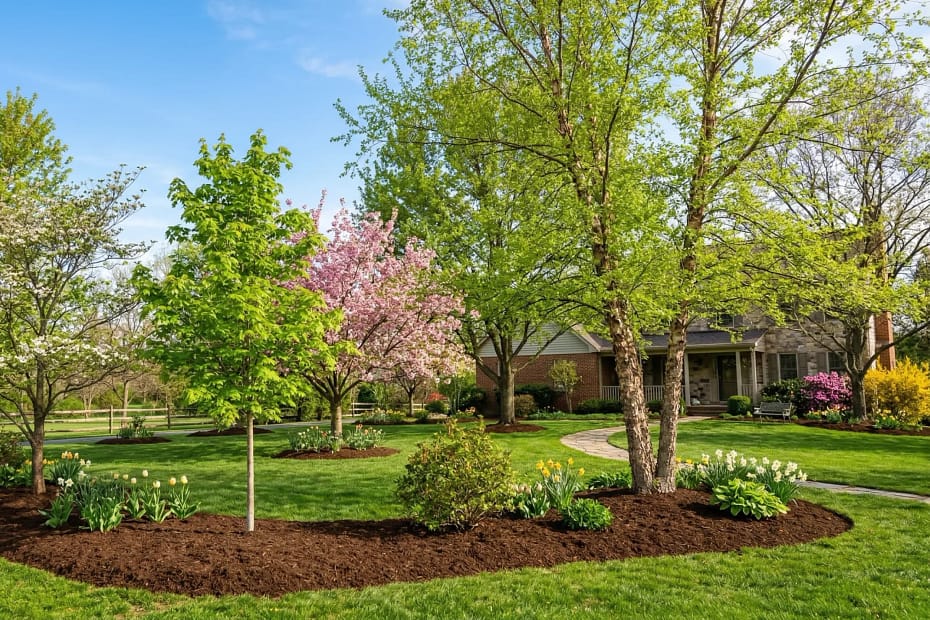
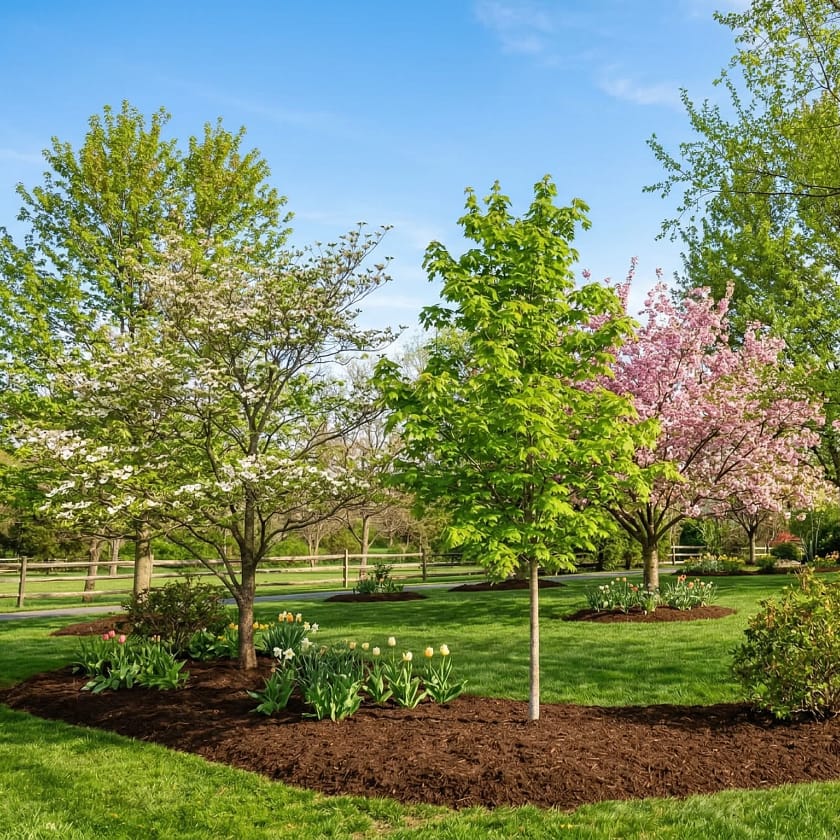
I keep mulch pulled back from the first few inches of the trunk to avoid trapped moisture, which can spark rot or attract insects. A fresh 2-3 inch layer of mulch spread in a doughnut shape works best for most trees. I avoid piling mulch against the trunk since it encourages decay and pests.
Prune for Health and Shape
Spring gives a great window to prune most trees just before or as buds swell. Cutting out dead or crossing branches lets in sunlight and gives a boost to the tree’s balanced growth. Some trees, like maples and birches, may leak sap heavily in spring; if sap flow bothers me, I wait to prune these until late summer. Otherwise, early spring pruning is a solid choice for most types and helps trees recover quickly before the rush of summer growth.
My Basic Pruning Checklist:
- Cut out dead, damaged, or diseased branches
- Remove branches growing inward or rubbing others
- Shape the crown for good airflow and strong structure
- Never remove more than 25% of the crown in one season
I always use clean, sharp tools and make cuts just outside the branch collar. Clean cuts let the tree heal and cut down on the risk of infection. Good structure now steps up health in the long run.
Check for Pests and Disease
Many insects and diseases start showing up in spring, so I look closely at branches, trunks, and leaves as they emerge. Catching issues early allows me to manage problems before they grow out of control.
Warning Signs I Watch For:
- Sticky sap spots, often a sign of borers or canker diseases
- New holes in leaves, buds, or trunk
- Discolored or wilting new leaves
- White, gray, or fuzzy patches on bark or branches
If I find groups of pests or odd symptoms, a local extension office or certified arborist can help me track down the problem. I use sprays or treatments only if necessary and always follow label directions. Staying sharp and checking trees closely can stop a minor issue from turning into an outbreak.
Fertilize if Needed
Spring is when trees burn up a lot of their stored energy pushing out fresh leaves and roots. Not all trees need fertilizer each year, but some benefit if the soil is poor or last year’s growth was weak. I base my decision on how trees looked last year or results from a soil test. Tossing on fertilizer “just in case” isn’t wise; it can sometimes cause more harm than good by encouraging weak, sappy growth or even polluting local waterways.
Signs a Tree Might Need Fertilizing:
- Pale or small new leaves
- Poor overall growth or thin crown
- Lots of twig and branch dieback
When fertilizing, I pick a slowrelease product made for trees and apply it at the root zone, not directly against the trunk. Established trees with healthy, dark green leaves and sturdy annual shoots usually don’t need extra feeding.
Water Deeply if Spring is Dry
Even in spring, dry spells can wear down trees. I check the soil around my trees, especially young ones, to be sure it’s moist but not waterlogged. If the season is unusually dry, I water deeply once a week rather than giving a light sprinkle every day. Deep watering builds resilience for summer heat waves and droughts.
How I Water for Healthy Roots:
- Water under the canopy to soak the area 8-12 inches deep
- Use a soaker hose or slow trickle rather than a fast spray
- Mulch makes it easy to hold in moisture between waterings
I avoid overwatering. Soggy soil can suffocate roots and set off fungal growth. Deep, less frequent waterings help roots grow downward instead of staying shallow and weak near the surface.
Protect Young Trees and Sensitive Species
Young and newly planted trees need extra attention as spring arrives. I check that stakes are secure but not tight around the trunk; flexibility helps trees bulk up their trunks. If I used tree wraps for winter, I take them off now so bark can breathe. Rabbits, deer, and rodents also target the bark of young trees, so I watch for chewed spots and set up guards if necessary.
Support Steps for New Trees:
- Check support ties and adjust so trees have room to move but stand upright
- Remove tree wrap so bark can dry out and breathe
- Look for animal chew marks and install wire mesh or guards if needed
This is a good time to mulch around young trees. Mulch pumps up moisture retention and blocks out weeds, giving a boost to early root development as the temperature rises.
Common Spring Tree Care Questions
Should I fertilize every tree each spring?
Not every tree needs annual fertilizing. I find mature trees on good soil usually grow strong without added fertilizer. Young or struggling trees might need the help, but I try to look at the soil or check how well the trees grew last year before tossing on more nutrients.
Is spring pruning safe for every tree?
Most trees handle light spring pruning well. Some, such as oak, elm, maple, and birch, may be open to sap flow, pests, or diseases at this time. For these, I either prune at another time or keep any spring pruning light.
How do I keep weeds away around trees?
Mulch is my top tool for weed control, but it shouldn’t touch the trunk. If I see weeds, I pull them out by hand before they sprout seeds.
Getting Started on Your Spring Tree Care
Trees need my help after a long winter to stay strong for summer and the seasons ahead. I use this checklist to catch issues early and make trees more resilient to storms, pests, and heat. Careful upkeep now means less hassle and more beautiful, healthy trees year after year.
Spring Tree Care To-Do:
- Walk around all trees and take a close look
- Clean up leaves, sticks, and other winter debris
- Prune dead, damaged, or crowded branches
- Watch for pests and treat only if needed
- Fertilize only if trees need a boost
- Water deeply if spring is dry
- Protect young trees and check their supports
I put these smart habits into practice each year because they keep trees thriving and my outdoor space looking its best. If you want healthy, eye-catching trees and fewer headaches, it all starts with simple care as spring rolls around. Check out reputable sources or ask a local arborist if you need expert tips for special tree species in your area. With a little regular care, your trees can stand tall and proud all year.
Botanicus Plus an AI PLUGIN for starters and experts
Botnicus Plus boasts an array of new features, enhancing its global appeal and user interaction. These include: 1) Multilingual Support for accessibility in various languages. 2) Virtual Tours of famous botanical gardens and historical plant sites. 3) A Botanical Identification Tool for users to upload and identify plants. 4) Seasonal Guides and Tips tailored to local climates and regions. 5) Opportunities for users to engage in Collaborative Projects and Citizen Science Initiatives. 6) Advice on Sustainable Gardening Practices. 7) Interactive Q&A Sessions with botany experts. 8) Personalized Plant Care Reminders for gardeners. These features enrich Botnicus Plus’s mission to provide comprehensive, interactive, and culturally rich botanical education, fostering a deeper connection with the natural world.
Botanicus-plus Plugin
Enjoy!👒
Invest in your future
Take time to learn
Begin your path in affiliate marketing and website building with a supportive community and me. Commit time to learning and earning as an investment in your future. Use whatever time you require to master the fundamentals before pursuing greater goals. Try it and register for free. You will not regret it—explore the potential yourself…And create your own with help of AI tools and agents