

AI-driven Reforestation Strategies
AI-driven reforestation strategies are gaining attention as new approaches to restore our planet’s forests and fight climate change. As someone who has witnessed both the negative impact of deforestation and the promise of innovative tech, I know these strategies bring fresh opportunities. AI is helping with the planning, monitoring, and scaling up of reforestation projects with more efficiency and precision than ever before. If you want to support healthy ecosystems and climate action, AI is becoming a convenient tool in the toolbox.
Why AI Matters for Reforestation Today
Reforestation isn’t simply a matter of planting trees and leaving. Forests are complicated, especially when you’re trying to rebuild what’s been lost to logging, wildfires, or agricultural clearing. With rapid tree loss and unpredictable weather patterns, traditional methods such as manual surveying or blanket seeding often fall short. AI brings a data-first approach, sorting massive amounts of satellite imagery, climate models, and soil readings to offer detailed insights about what to plant, where, and when. For anyone who wants to see real results, AI helps make reforestation projects smarter, quicker, and more likely to succeed.
The global reforestation movement is spreading fast, with initiatives in regions ranging from the Amazon to Southeast Asia and Africa. According to the World Resources Institute, larger and larger projects are being launched, and those projects require reliable data and management tools. AI-powered systems are being harnessed by organizations of all sizes, gaining popularity globally because they help channel resources to where they will have the most benefit. If you support tree planting campaigns, keeping an eye on how AI is influencing the field can help you understand what’s succeeding and what might come next.
Get Started with AI-Driven Reforestation
AI-driven reforestation isn’t only for researchers or large organizations. Thanks to a surge in apps and open-data resources, community groups and small startups can use these tools as well. When beginning, it’s helpful to know about three main elements: collecting data, analyzing the data with AI, and putting the plan into action.
- Data Collection: Drones and satellites are useful for gathering accurate information about land use, soil moisture, and forest health.
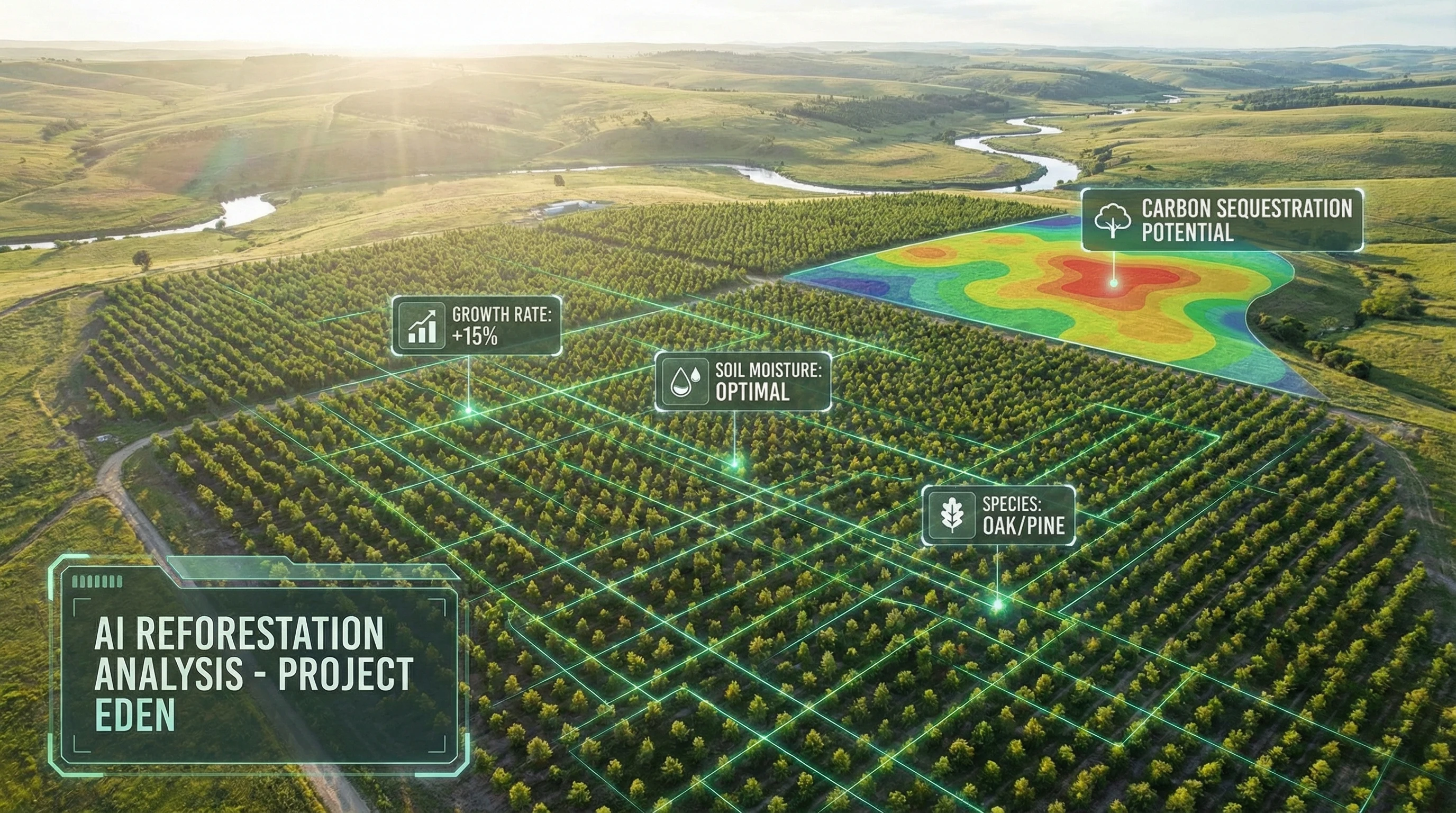
- AI Analysis: Smart algorithms sift through this data to map the best planting sites, calculate survival rates for saplings, and project carbon capture potential.
- Ground-Level Action: With the plan ready, tree planting (sometimes using drones) and ongoing monitoring start, with AI tools constantly updating info as the forest matures.
Knowing how these steps work together gives a clearer understanding of where you might fit in—whether as a member of an environmental club, a business looking at climate responsibility, or a person who simply wants to plant a tree in a smarter way.
Steps for a Successful AI-Powered Reforestation Project
From my own tracking of reforestation projects, I’ve learned that using AI successfully depends on carefully breaking the process into simple steps. Each one adds to better chances of success and helps prevent issues like seed waste or poor species choices.
- Land Survey and Assessment: Start with AI-mapping to highlight areas in need. These tools spot soil type, water sources, and evaluate what native species still remain.
- Develop a Planting Blueprint: Use AI to match tree species with current and projected local conditions. Platforms such as Microsoft’s AI for Earth or Google Earth Engine can process big data sets quickly.
- Planting Operations: Whether using traditional teams or automated drones, follow AI-generated maps for planting. Drone seeders can speed up the process, especially in tough terrain.
- Ongoing Monitoring and Adjustment: Use continuing AI analysis to watch sapling growth, measure survival rates, and spot threats early like disease or water shortages. Plans can be tweaked on the fly with up-to-the-moment info.
- Result Reporting: Allow AI tools to automate progress reports for funders and stakeholders, boosting transparency and community trust.
Careful attention to each step can make all the difference. I’ve seen projects falter when they skip monitoring or don’t act on early warning signs. In my experience, the feedback that AI provides lets you make tiny changes that save countless young trees in the long run.
What to Consider Before Launching an AI Reforestation Project
High-tech approaches don’t erase every challenge from reforestation work. Thinking through the obstacles ahead of time can conserve resources and keep the focus sharp—centering the well-being of the forest above all. When I help evaluate new projects, these concerns always come up:
- Data Accessibility: Reliable maps and satellite data are crucial for any AI-driven plan. If key data is missing or outdated, the results can fall flat.
- Smart Species Choice: Quick wins via monocultures may look impressive at first, but they rarely lead to healthy forests. Local experience goes hand-in-hand with AI to pick the right mix of trees.
- Support from the Community: Projects that skip local involvement risk collapsing when outsiders depart. Residents with firsthand knowledge can guide both tech decisions and planting, ensuring the project sticks.
- Costs and Skills: AI use might seem high-priced, though options are becoming increasingly affordable. Training workers or volunteers to handle the technology and interpret results is essential for future progress.
Data Quality
Poor or outdated data can do more harm than good. I always double-check for recent maps or reliable fieldwork before using any AI tools. High-quality input is the backbone of meaningful progress.
Choose the Best Trees for Each Locale
AI isn’t a replacement for firsthand, local insights. I’ve noticed projects where fast early growth didn’t last because seedlings were unsuited for the climate. Blending raw data with human know-how helps sidestep these issues.
Continual Monitoring
Some believe planting is the final chapter, but it really marks just the beginning. AI-enabled monitoring—like remote sensing for outbreaks or soil moisture sensors—can flag problems while they’re still easy to fix. Ignoring this layer is a major reason young forests sometimes fail to take hold.
Smart Strategies You Can Apply? Some Practical Tips
If you’re hoping to use AI-driven reforestation, a few real-world strategies can go a long way. Based on lessons learned from volunteering with conservation groups and following larger projects, I recommend these:
Start Small, Then Expand: Pilot your effort, monitor with AI, and use results to build a bigger project later. You’ll learn quickly and avoid major setbacks.
Fuse Data from Different Sources: Pair satellite imagery with drone photographs and field-collected soil info for a full picture. The more diverse your data, the better your AI results will be.
Stay Flexible for Weather Shifts: As the climate changes, AI is excellent for adapting plans to droughts, storms, or fire risks. Updating your approach ensures long-lasting, robust forests.
Get Locals On Board: Hold workshops or info sessions, inviting feedback at every step. Local wisdom fills in knowledge gaps and makes your project more resilient.
The Essentials? What Tools Should Beginners Focus On?
If you’re taking your first steps into AI-driven reforestation, there are a handful of tools and resources that can help without being overwhelming. Many organizations are making their software accessible for free or at low cost, along with training options. Some of the most useful:
- Satellite Imaging Services: Google Earth Engine and similar services give easy access to up-to-date maps and simple analysis tools ready for newcomers.
- Drone Survey Platforms: Userfriendly drone mapping tools and apps help you create detailed, useful photos—even on a tight budget.
- Tree Species Databases: Open-source resources, like the Global Biodiversity Information Facility (GBIF), list optimal species for specific local climates and soil.
- AI Mapping Platforms: Restor and OpenForests enable you to upload data, auto-generate mapping, and track your progress over multiple years.
I’ve found the best outcomes come when these tools are combined with hands-on experience from communities. Testing more than one option lets you adapt to your project needs, location, and budget.
Frequently Asked Questions
Here are answers to some frequent questions I hear from new volunteers, project leaders, and curious supporters about AI-driven reforestation:
Question: Can AI measure exactly how many trees should be planted in a particular plot?
Answer: AI delivers strong estimates using data like soil composition or rainfall maps. However, supplementing with in-person fieldwork helps sharpen those numbers.
Question: Is expensive tech necessary for AI-driven work?
Answer: Not at all. Many projects find success using open-source software along with affordable drones or information collected by community members.
Question: How do individuals and local groups get involved?
Answer: Many reforestation projects welcome volunteers—whether it’s data collection, field monitoring, or assisting with drone operations. There are also online courses to help beginners jump in from home.
Look Ahead to The Future of AI and Forest Restoration
AI-powered reforestation is still on the rise, and new methods surface each year. As machine learning and remote sensing get better, and as community tech becomes more accessible, our ability to restore forests will only expand. Mixing cutting-edge analysis, deep community knowledge, and long-term care, we can all make a real difference in healing our forests. If you’re an individual with a passion, a nonprofit, or a business, now’s the best time to join in, learn, and have a positive effect on the natural world.
Botanicus Plus a GPT for starters and experts
Botnicus Plus boasts an array of new features, enhancing its global appeal and user interaction. These include: 1) Multilingual Support for accessibility in various languages. 2) Virtual Tours of famous botanical gardens and historical plant sites. 3) A Botanical Identification Tool for users to upload and identify plants. 4) Seasonal Guides and Tips tailored to local climates and regions. 5) Opportunities for users to engage in Collaborative Projects and Citizen Science Initiatives. 6) Advice on Sustainable Gardening Practices. 7) Interactive Q&A Sessions with botany experts. 8) Personalized Plant Care Reminders for gardeners. These features enrich Botnicus Plus’s mission to provide comprehensive, interactive, and culturally rich botanical education, fostering a deeper connection with the natural world.
Enjoy!👒
Invest in your future
Take time to learn
Embark on your journey in affiliate marketing and website creation alongside an incredible community and myself. Invest in your future by dedicating time to learn and earn. Take all the time you need to master the basics before aiming higher. Give it a try and sign up for free. You won't regret it! Discover the possibilities for yourself...