
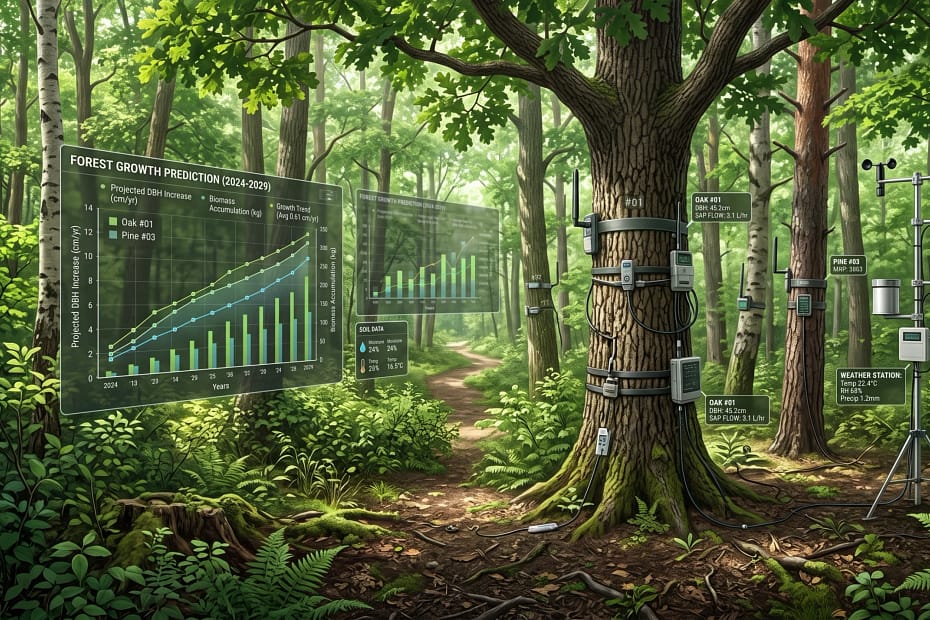
How Ai Predicts Tree Growth
Tree growth predictions have come a long way from sketching measurements on a field notebook. These days, artificial intelligence (AI) is making it easier, and surprisingly accurate, to understand how trees will grow over months, years, or even decades. I’m genuinely impressed with how fast technology is helping ecologists, foresters, and anyone who cares about the environment get better at planning for the future of our forests.
If you’re like me, you might wonder how AI can possibly predict something as complicated and wild as tree growth. Turns out, it’s actually a fascinating mix of biology, weather patterns, satellite data, and some serious number crunching. It’s pretty handy for forest managers, climate scientists, or students looking for reliable answers outside the textbook.
Here’s a beginner friendly, step-by-step guide to how AI is making tree growth forecasts smarter, faster, and more useful for all sorts of people, whether you’re managing an orchard or keeping tabs on national parks.
Start with the Basics… What Influences Tree Growth?
Before jumping into AI, it’s really important to get a grasp on what actually makes trees grow. There isn’t a single magic ingredient. Instead, you get a mix of soil nutrients, sunlight, rainfall, local temperature swings, genetics, and even insects or diseases. Tracking all of these by hand is nearly impossible over large areas, and this is where AI shows its real strengths.
Main Factors Affecting Tree Growth:
- Weather and Climate. Rainfall levels, temperature, and seasons directly affect how fast a tree gets tall or wide.
- Soil Type. Trees in fertile, welldrained soils usually outpace those on rocky or nutrientpoor sites.
- Species & Genetics. Oak, pine, and maple all grow at different rates, and even the same species can vary by local genetics.
- Disturbances. Events like storms, fires, or insect infestations can stall or speed up growth in unexpected ways.
All these factors are constantly changing, which is why forecasting tree growth is such a tricky puzzle. AI makes sense of these shifting pieces faster than any human possibly can.
How AI Collects Data for Tree Growth Predictions
Reliable predictions start with great data. AI doesn’t just guess. It learns from lots of different information sources. Some input data comes from direct fieldwork, but there’s a lot more happening behind the scenes.
Common Data Sources for AI Models:
- Satellite Imagery. Modern satellites can scan forests regularly, picking up on changes in leaf color, canopy size, and even how much light is being absorbed.
- Field Measurements. Researchers and drones record tree height, trunk diameter, age, and even leaf moisture.
- Weather Stations. Climate records, like rain, sunlight, and temperature, give context to why trees are doing well or not.
- Historical Records. Past growth rates and forest management activities help teach AI how trees responded in similar situations before.
When AI brings all this together, the result is a clear picture of how things look right now. This is very helpful for giving future predictions some solid footing and offers a much bigger view than traditional hand-gathered data could provide. Sometimes, environmental changes in one part of the forest are only visible through this blend of sources, making AI a fantastic partner in the process.
How AI Models Actually Predict Tree Growth
This is where things get really cool. AI uses mathematical formulas or “models” trained on all that data. These models start to spot patterns and relationships that are nearly impossible for people to see just by looking at tables or charts. Seasonality, particular rainfall patterns, or combinations of variables can be connected more accurately with these digital tools.
Popular AI Approaches:
- Machine Learning (ML). Algorithms learn from past data to predict future outcomes. For trees, ML might guess how tall a tree will get next year based on past weather and soil information.
- Deep Learning. Uses neural networks inspired by the brain to make sense of more complicated connections, like how several factors mix together to boost or slow growth.
- Remote Sensing Analysis. AI scans thousands of satellite images and compares them over time to watch growth trends across whole forests.
A Simple Example:
Suppose an AI model is trained on maple tree growth from 100 different sites using 20 years of rainfall, sunlight, soil, and insect activity data. After learning the patterns, it can make smart predictions for new maple forests, even in places it hasn’t “seen” before. That’s super useful for foresters planning new woodlands or scientists studying the effects of climate change. Some tools even add the ability to run different “what-if” scenarios, allowing users to change up rainfall levels or soil types to see how the forest might respond down the line.
Human-AI Collaboration And Why People Still Matter?
AI is powerful, but it’s not perfect on its own. The real magic happens when professionals work side by side with AI predictions. Experts often spot errors in the data or add background that algorithms miss, like recent pests that haven’t shown up in digital records yet. This teamwork is essential for keeping results valid and meaningful.
Ways Experts Shape AI Predictions:
- Checking AI forecasts against what’s happening on the ground (you’d be surprised how often this catches small problems).
- Adding local knowledge, like which parts of a park are shaded or get flooded.
- Updating models when new types of insects, diseases, or extreme weather pop up.
This back and forth builds more accurate tools and helps everyone trust the predictions more. In fast-changing climates or areas with unique tree mixes, local expertise is crucial.
Benefits of Using AI for Tree Growth Forecasts
There are some clear wins when AI is part of the picture:
- It saves people time. No need to manually measure every tree year after year.
- Models work at huge scales, from neighborhood woodlots to giant national parks.
- Predictions help with smart planning, like knowing which areas need thinning or extra care.
- AI helps scientists test “what if” scenarios, such as changes in rainfall or forest fires.
- Good forecasts help governments and organizations plan for carbon storage and climate policies.
The combination of broad scale and local detail makes these models relevant for everyone from small landowners to global policy makers. Accurate forecasts can help us prepare for changing ecosystems and protect wildlife that depends on healthy forests.
Common Challenges and Limitations
Just like any tool, AI isn’t magic. Here are a few things to watch out for:
- AI depends on good data. Bad or missing info can create weird predictions.
- Rare events, like extreme storms or disease outbreaks, can throw off even the smartest model.
- It sometimes needs lots of computing power and technical skills to set up and run.
- Interpreting the predictions takes experience, especially when local factors aren’t in the data set.
Despite these bumps, AI is constantly improving as more information is gathered and methods are upgraded. This progress keeps the field moving forward and makes each prediction a little bit stronger than the last. The collaboration between tech experts and tree professionals means better checking in and ongoing model updates.

FAQ: Quick Answers for Curious Minds
Can AI predict the exact height of my backyard tree?
AI gives a pretty good estimate based on the available data, but natural surprises mean it won’t get it perfect every time. For the best results, combine AI forecasts with regular checks or measurements done in your own yard.
How often do AI models get updated?
Many organizations update AI models annually or after new field data comes in. Some cutting edge systems use constant satellite feeds and adjust models in real time, keeping up with the changing environment.
I want to try this technology; are there free tools?
Plenty of university research groups and some international environmental organizations offer open source or free tree growth prediction models. They’re super handy for students and hobbyists wanting to explore forest growth science.
Where To Learn More and Get Involved
Staying up to date on AI in forestry and tree growth is easier than ever. Here are some cool ways to get involved and learn more:
- Check out open data projects like NASA’s MODIS satellite maps for a chance to get into the world of forest health and see real-life examples.
- Read forestry journals or subscribe to newsletters from environmental tech groups; these are packed with the latest updates and case studies.
- Ask local forestry services or your university’s biology department about their favorite prediction tools and see how you can participate or volunteer.
As AI keeps advancing, it’s exciting to see new discoveries pop up. Maybe someone with a fresh perspective, or a newfound curiosity about their backyard trees, will make the next big leap in understanding how our forests are growing. For now, asking smart questions and getting hands-on with these tools is already a great place to start.
Botanicus Plus a GPT for starters and experts
Botnicus Plus boasts an array of new features, enhancing its global appeal and user interaction. These include: 1) Multilingual Support for accessibility in various languages. 2) Virtual Tours of famous botanical gardens and historical plant sites. 3) A Botanical Identification Tool for users to upload and identify plants. 4) Seasonal Guides and Tips tailored to local climates and regions. 5) Opportunities for users to engage in Collaborative Projects and Citizen Science Initiatives. 6) Advice on Sustainable Gardening Practices. 7) Interactive Q&A Sessions with botany experts. 8) Personalized Plant Care Reminders for gardeners. These features enrich Botnicus Plus’s mission to provide comprehensive, interactive, and culturally rich botanical education, fostering a deeper connection with the natural world.
Enjoy!👒
Invest in your future
Take time to learn
Embark on your journey in affiliate marketing and website creation alongside an incredible community and myself. Invest in your future by dedicating time to learn and earn. Take all the time you need to master the basics before aiming higher. Give it a try and sign up for free. You won't regret it! Discover the possibilities for yourself...