

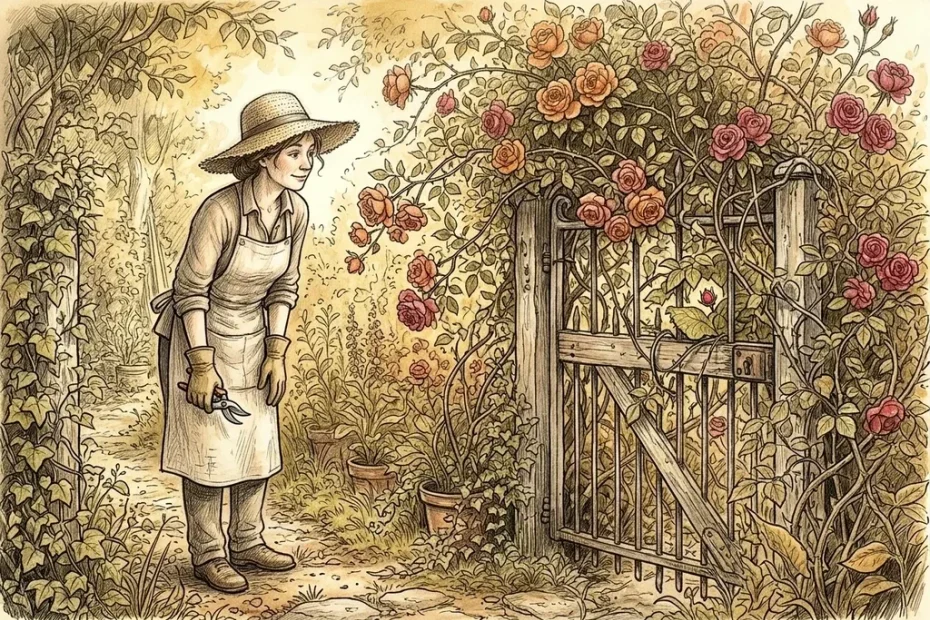
Why Every Pruning Cut Is a Tree Decision, Not a Haircut
Trees do not grow back the way hair does. Every cut leaves a wound that stays in the wood for life, so how to prune a tree correctly comes down to making the cut the tree can seal best. Put it at the branch collar, remove only what you have a reason to remove, and do it when the tree is best able to respond.
Does your tree actually want a haircut?
Mostly, no. A tree in a forest never visits a barber. It drops its shaded lower branches on its own schedule and keeps growing for centuries.
Good reasons to prune are few and specific.
- The branch is dead, diseased or broken.
- Two branches rub or cross, and the wound where they rub is an open door for decay.
- A branch blocks a path, a roof or a view of the street, and removing it is simpler than living with it.
- A young tree has a structural flaw that is cheap to fix now and expensive to fix in twenty years.
“It looks a bit big” is not on that list. Neither is “it’s spring and I own loppers.” A tree that is healthy, well placed and structurally sound usually needs very little from you, and the best cut is often the one you decide not to make.
What happens inside a tree when you cut it?
Skin heals by replacing damaged tissue. A tree does not. Wood that is injured stays injured, and the tree responds by walling it off and growing new wood around it.
Arborist and researcher Alex Shigo described this as compartmentalization, summed up as CODIT, short for Compartmentalization Of Decay In Trees. The tree builds chemical and structural barriers around the wound. Three of these walls resist decay spreading up and down, inward toward the center, and sideways around the trunk. The fourth wall is the strongest. It is the new wood the tree grows after the injury, which separates the damaged wood from everything that grows afterward.
At the edges of the cut, the tree also grows a rim of woundwood. That rim rolls inward over the years and covers the wound. The wound does not fill in. It gets covered over, and the old wood behind it stays sealed off. This is why a small, clean cut in the right place gives the tree an easy job, while a big ragged one in the wrong place gives it a hard one.
A second piece of tree biology explains what happens above the cut. The growing tip of a shoot produces a hormone called auxin that suppresses the buds below it. Biologists call this apical dominance. Remove the tip and the suppression lifts, and the buds just below the cut wake up and push out shoots. This is why hedges thicken when you clip them and why a topped tree explodes into dense, upright sprouts.
Leaves matter too. They make the sugars that power wound sealing and regrowth. Take off too much leaf area at once and the tree has less to work with at exactly the moment it needs more.
Where should the cut go to help a tree heal?
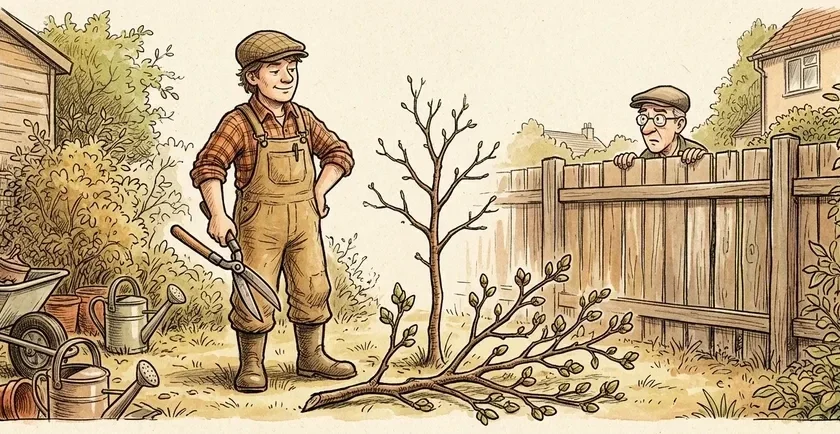
Right outside the branch collar. The collar is the slightly swollen ring of bark where a branch joins the trunk or a larger limb. On the upper side you will often see a raised ridge of bark running down into the join, called the branch bark ridge. The tissue in this zone is what produces the tree’s protective response, so you want to leave it intact.
Two errors are common, and both hurt.
- A flush cut slices the collar off and exposes the trunk’s wood. The wound is larger and the tree has lost the very tissue that would seal it.
- A stub cut leaves a length of branch behind. The stub dies back, rots, and the tree has to seal around a dead lump instead of a clean surface.
For any branch too heavy to hold with one hand, use the three cut method. It stops the branch’s own weight from tearing a strip of bark down the trunk.
- Make an undercut about a hand’s width out from the trunk, going a quarter to a third of the way up through the branch.
- Make a second cut a little further out on the top of the branch, and let it fall. The undercut stops the bark from ripping.
- Cut the remaining stub just outside the branch collar, angled slightly away from the trunk so water does not sit in the wound.
Dead branches get the same treatment. Look for the collar, which is often swollen around the base of a dead limb, and cut just outside it.
Size matters as well. A cut on a twig as thick as a pencil is a small wound. A cut on a limb as thick as your thigh may take years to cover, and sometimes never does. This is the strongest argument for pruning young and pruning small. If you need sharp, clean tools for this, the tools worth owning are covered in the Tree Care Toolkit. A dull blade crushes bark and leaves a ragged edge that is harder to seal.
You do not need to paint the wound. Research has not found that wound dressings speed up sealing, and they can trap moisture against the wood. Let the tree do its own work.
When is the best time of year to prune?
For most deciduous trees, the best window is the dormant season, in late winter before the buds swell. You can see the branch structure clearly without leaves, many pathogens and insects are inactive, and the tree starts sealing the wound when the spring flush begins.
Today is mid November, so a lot of growers are asking whether now is the moment. In many climates it is an awkward time. Autumn is when the tree is moving reserves into storage and when many decay fungi release spores. Dead, broken or hazardous branches can come off whenever you find them. Everything else usually waits until the tree is properly dormant.
Some exceptions are worth knowing.
- Oaks (Quercus) in regions with oak wilt should not be pruned in the growing season. Beetles carry the fungus to fresh wounds. Check local guidance, since the risk depends on where you live. If you love oaks, the majesty of oak trees is a good reason to treat them gently.
- Elms (Ulmus) face a similar problem with Dutch elm disease, which is spread by bark beetles that are active in warm months.
- Maples (Acer) and birches (Betula) bleed sap if cut in late winter or early spring. It looks alarming and is mostly harmless, but if it bothers you, prune after the leaves are fully out.
- Spring flowering trees such as magnolias and flowering cherries (Prunus) set their flower buds the previous season. Prune them right after flowering or you cut off the display.
- Cherries and other stone fruit (Prunus) are pruned in summer in some damp climates, because of silver leaf disease. Local advice matters here.
Which popular cuts are not worth making?
Some habits are common because they are easy and satisfy the eye, not because they help the tree.
- Topping. Cutting main branches back to stubs removes the crown and leaves large wounds that rarely seal. The tree responds with a thicket of fast, weakly attached sprouts, so the tree is soon as tall as before and less safe. Reduce height by cutting back to a side branch that is large enough to take over as the new leader, roughly a third the diameter of the stem you are removing.
- Flush cuts. Covered above. They feel tidy and the tree pays for it.
- Wound paint. It looks caring and does not do what the can promises.
- Lion tailing. Stripping all the inner branches and leaving tufts at the tips puts the weight at the ends of the limbs, where it is most likely to break them. It also exposes bark to sun scald.
- Removing more than about a quarter of the live crown in a year. The tree runs short of leaf area to power its recovery. If it needs more than that, spread the work over several seasons.
- Crape murder. Many gardens cut crape myrtles (Lagerstroemia) to knuckled stumps every winter. They do flower on the new shoots, but the knuckles and thin, whippy growth are a lot of work for a tree that did not need any of it. Remove dead wood and crossing stems, and let the rest alone. 😏
How do you shape a young tree so it needs less pruning later?
Do the hard thinking early, when every cut is small. This is where pruning pays back most.
At planting, remove only what is dead or broken. A new tree needs all its leaves to rebuild roots. Wait a year or two before shaping, and once it is established, start looking for structure.
- Choose one dominant leader on species that naturally grow a single central trunk, such as many oaks and ashes. If two stems compete, reduce or remove the weaker one while it is still thin.
- Watch for tight V shaped unions. Where two stems join at a narrow angle, bark can get trapped inside the fork, which creates a weak join that splits in storms. Wider angles hold better.
- Space the main branches around the trunk and up its length, rather than letting several grow from the same spot.
- Keep some low branches for now. Shorten them rather than removing them, because they add to trunk thickness and taper. Take them off gradually over several years.
A young tree pruned this way in three or four sessions of small cuts will rarely need a saw at all. Skip this stage and the same fixes may need a ladder and a professional.
When should you put the saw down and call an arborist?
Some jobs are not worth the risk, whatever your skill with loppers. Call a qualified arborist in any of these cases.
- The branch is close to power lines. Never prune near them yourself.
- The cut requires a saw above shoulder height, or a ladder with a saw in your hands.
- A large limb is dead, cracked or hanging after a storm.
- You see signs of decay such as mushrooms at the base, hollow sections, deep cracks or a new lean.
- The tree needs a large crown reduction or a major structural fix.
- You are unsure whether the tree should be pruned at all.
Look for an arborist with recognized certification in your country, such as ISA certification where it is offered, and ask what they plan to cut and why. A good one will talk about collars, crown ratios and the tree’s recovery. One who offers to top the tree is not the one to hire.
Know someone with a tree and a pair of loppers?
Send them this before they make the first cut, and tell me in the comments which pruning myth you believed longest.